
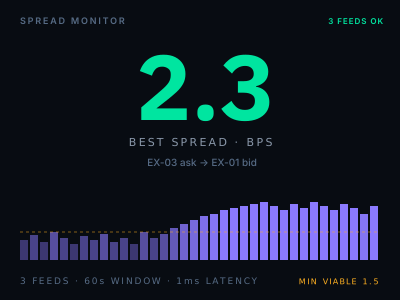
Cross-venue spread monitoring
Three exchanges, every directional pair, computed continuously. The best spread anchors the surface; the matrix shows where it lives. A threshold marks the line below which the engine doesn't bother.
A cross-venue spot arbitrage engine, designed and built end to end.
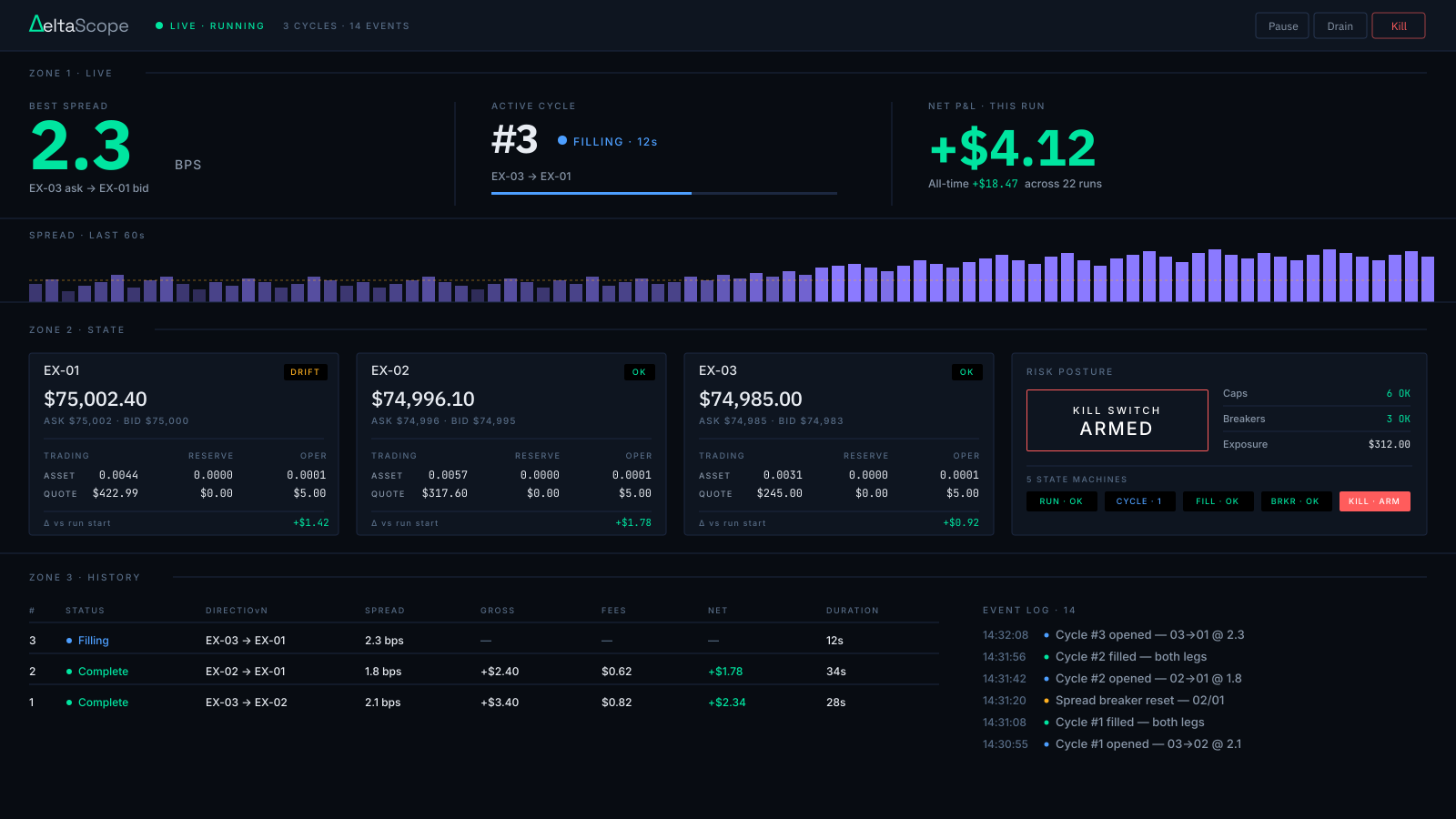
A live trading instrument, designed and built end to end. Three exchanges, one engine, a containment hierarchy that prefers a closed position to an open question. The dashboard is its working surface — built to be sat in front of, not glanced at.
A trading screen has to make three things legible at once: what the market is doing right now, what the system is holding, and what it has done. Most screens crowd these together and let the operator sort it out. The design problem was to refuse that and to give each tempo its own field, and to make the relationships between them visible without rendering them dense.
Trading screens fail at a specific thing: they crowd the live, the standing, and the recorded into the same field, and the operator's eye has to keep resolving which is which. DeltaScope's dashboard separates them. Live signals at the top — best spread, active cycle, P&L. Standing state in the middle — exchanges, balances, risk posture. Recorded history at the bottom — completed cycles, the event log. One screen, three tempos, no collision.
Live anchors at the top, best spread, active cycle, net P&L, sized to be read across the room and updated in real time. Exchange state in the middle, three venues, three buckets per venue, balances and prices reconciled in one card. Recorded history at the bottom, every completed cycle, every event, filterable. Kill switch held separate from operating controls, where it belongs.
See Plate 01 above for the full surface.
Three exchanges, every directional pair, computed continuously. The best spread anchors the surface; the matrix shows where it lives. A threshold marks the line below which the engine doesn't bother.
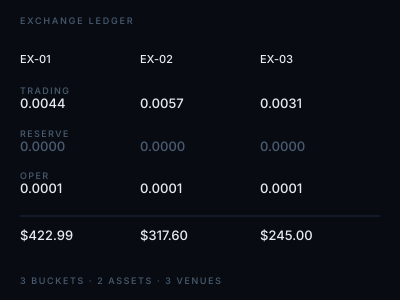
Every venue holds three balances: trading capital, profit reserve, operating float. Money moves between buckets on rules, not impulse. The dashboard surfaces all three at once, in asset and quote, per exchange.
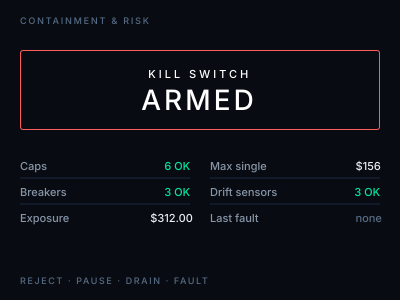
Caps, breakers, and a kill switch — ranked by severity, visible at all times. The system prefers to pause itself than to hold a position it can't explain. Risk posture reads in a single glance: what's armed, what's been tripped, what's exposed.
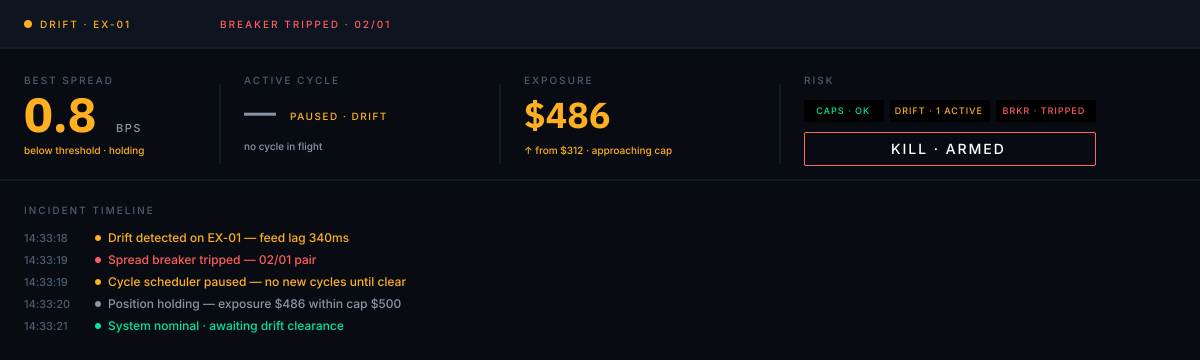
The system has a temperament under stress. A drift on one venue, a breaker tripped on another, exposure climbing — the dashboard reorganizes around the new center of gravity without losing its register. Warnings are amber, not red. Red is reserved for what's been stopped.
Mint for go, red for stop, amber for drift, purple for the proprietary visualization. Tabular numerics throughout. Three text registers — primary, secondary, tertiary — that hold across every surface. Status spoken in single words.
Three exchanges, one engine, end to end.
Next: extending the venue set, refining the cycle scheduler.